Grid solution and electrical strategy for a constrained connection
Project Overview
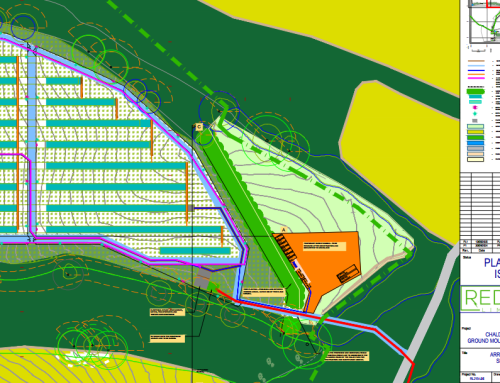
REDUCE LIMITED developed the grid and electrical strategy for the Hungerford project to ensure the renewable energy scheme can connect safely and economically, while supporting future loads such as EV charging and future array expansion.
Objectives
Key Details
Primary objective
-
Achieve 100% electricity self-sufficiency for the Hungerford Park site on a net annual basis, by maximising on-site generation and optimising storage and demand management so that grid import becomes the exception rather than the norm.
Supporting objectives
-
Maximise on-site consumption of renewable generation by prioritising self-consumption (load matching), then charging storage, with export only where unavoidable or commercially beneficial.
-
Deliver operational resilience by maintaining continuity of supply through grid outages and disturbances, using islanding capability (where appropriate), defined critical-load prioritisation, and black-start strategy if required.
-
Reduce and stabilise energy costs by minimising peak imports, avoiding capacity-driven charges where relevant, and reducing exposure to future electricity price volatility.
-
Provide a scalable architecture that allows staged expansion (additional PV, BESS, EV charging, heat electrification, and future loads) without major rework to the core electrical infrastructure.
-
Optimise the grid interface by managing import/export limits, power factor, and protection settings to meet DNO requirements and secure a compliant, bankable connection arrangement.
-
Improve power quality and site performance by managing harmonics, voltage stability, and transient behaviour so sensitive or high-value loads operate reliably.
-
Enable transparent monitoring and control with site-wide sub-metering, a clear energy dashboard, alarms, and reporting that supports operational decision-making and verification of performance.
-
Maintain safe, maintainable operation through robust protection coordination, clear operating modes (grid-parallel/islanded), safe isolation procedures, and a defined maintenance and testing regime.
-
Ensure planning and stakeholder alignment by evidencing visual, ecological, and operational impacts are mitigated, and that the microgrid supports the site’s long-term sustainability narrative.
-
Produce an implementable delivery plan with clear phasing, responsibilities, CAPEX/OPEX assumptions, performance guarantees (where available), and measurable acceptance criteria.
Implementation
Implementation will be delivered as a staged programme, starting with confirming the site baseline and then progressing through detailed design, procurement, installation, and commissioning. The first step is to validate the energy model using metered data (half-hourly where available) so that generation, storage, and control settings are sized against real demand profiles rather than headline annual consumption. In parallel, the grid interface strategy will be finalised with the DNO, including agreed import/export limits, protection requirements, and any constraints that affect how close the site can practically operate to full self-sufficiency.
Detailed design will then be completed for the core microgrid architecture: PV generation, battery energy storage, site distribution upgrades, metering, and the control layer. The design will define operating modes (grid-parallel and, where required, islanded operation), protection coordination, and load prioritisation so the system behaves predictably under normal operation and abnormal conditions. This stage also locks in civil and electrical scopes (duct routes, switchgear locations, communications, and any enabling works) to minimise disruption during construction.
Installation will be planned to maintain site operations, with isolations and changeovers scheduled around critical activities. Works will typically progress from enabling infrastructure (switchgear, communications, metering, and any feeder upgrades), then generation and storage installation, followed by integration and functional testing. Commissioning will include step-by-step verification of protection settings, control sequences, and performance under representative operating conditions, culminating in an acceptance test that confirms the agreed self-sufficiency strategy, monitoring, and reporting are all functioning as specified.
Following handover, an initial optimisation period will be used to fine-tune control parameters (charge/discharge thresholds, peak-limiting, export limitation, and load-shifting rules) to maximise self-consumption and reduce grid reliance. The project will close with a documented operating philosophy, training for site staff, and a maintenance/testing plan to ensure the microgrid continues to deliver performance and compliance over the long term.
Key Details



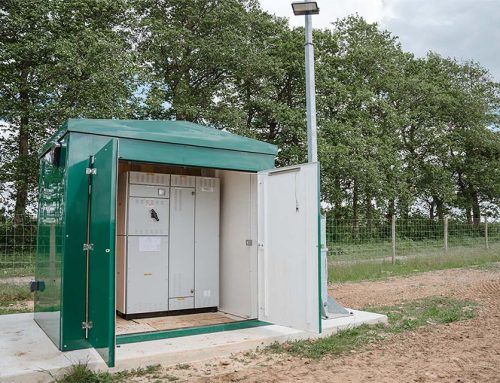
A private 11kV network provides a robust backbone for distributing locally generated power from the solar farm to multiple demand points across the estate with materially lower electrical losses and better voltage control than low-voltage distribution over long distances. By moving bulk power at 11kV and stepping down locally near each load centre, the estate can serve dispersed buildings more efficiently, reduce conductor sizes for equivalent capacity, and improve overall power quality and stability at the point of use.
From a commercial and strategic perspective, a private 11kV network enables the estate to treat generation and demand as a single integrated system. This improves self-consumption of solar output, reduces reliance on grid imports, and allows a consistent, expandable connection method for new loads (for example EV charging, workshops, new buildings, or electrified heating) without repeatedly revisiting the core grid connection strategy. It also provides a clear route to centralised control (metering, protection, and load management) so the estate can actively manage peak demand, export limitation, and future storage integration in a coordinated manner.
A further benefit is resilience and operational control. With appropriate design (protection coordination, sectionalising, and standby arrangements), the estate can isolate faults to smaller sections of the network, maintaining supply to other areas and simplifying fault finding. The private network also supports a structured approach to safety and compliance, with defined ownership boundaries, engineered earthing and protection schemes, and consistent documentation and maintenance regimes across the estate’s electrical infrastructure.
Conclusion
The Hungerford Park microgrid solution demonstrates a clear pathway for the estate to move from a conventional grid-supplied site to one that is effectively self-sufficient on a net annual basis. By integrating on-site generation, storage, and intelligent controls, the system is designed to maximise self-consumption, minimise grid imports, and provide a stable platform for future electrification and load growth without undermining current performance.
Critically, the introduction of a private 11kV network creates the electrical backbone needed to distribute renewable generation efficiently across a dispersed estate. This approach reduces losses, improves voltage stability, and enables a single coordinated energy strategy rather than a collection of isolated supplies. It also simplifies future expansion and enhances resilience by allowing structured protection and sectionalisation across the network.
Overall, the project positions Hungerford Park to secure long-term energy cost control, improved operational resilience, and a credible route to decarbonisation, while maintaining practical deliverability through phased implementation and clear grid and planning compliance.